
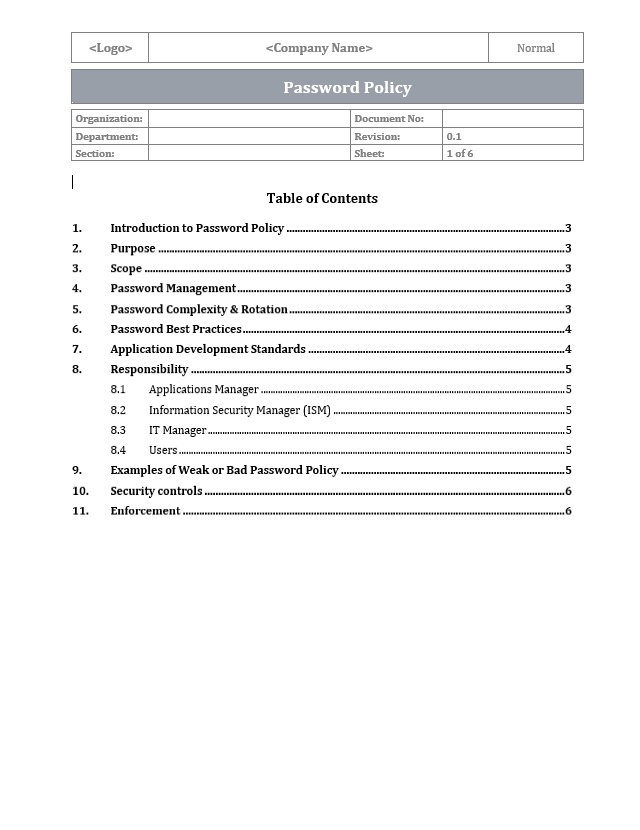
Understanding ISO 27001 Password Management
ISO 27001 is an internationally recognised standard for information security management. It provides a framework for organisations to establish, implement, maintain, and continually improve their information security management systems.
One crucial aspect of information security is password management. Passwords are the primary line of defence against unauthorised access to sensitive data and systems. ISO 27001 outlines specific requirements for password management to ensure the confidentiality, integrity, and availability of information.
Effective password management under ISO 27001 includes:
- Password Complexity: Passwords should be complex and difficult to guess. They should contain a mix of uppercase and lowercase letters, numbers, and special characters.
- Password Length: ISO 27001 recommends a minimum password length to enhance security. Longer passwords are generally more secure than shorter ones.
- Password Storage: Passwords should be securely stored using encryption or hashing techniques to prevent unauthorised access in case of a data breach.
- Password Rotation: Regularly changing passwords reduces the risk of compromise due to prolonged use. ISO 27001 suggests setting specific intervals for password changes based on risk assessments.
- Password Sharing: Sharing passwords should be avoided whenever possible. Each user should have unique credentials to minimise the impact of a potential security incident.
By adhering to ISO 27001 guidelines on password management, organisations can strengthen their overall information security posture and mitigate the risks associated with weak or compromised passwords. Implementing robust password policies and procedures is essential in safeguarding sensitive data and maintaining compliance with regulatory requirements.
In conclusion, effective password management plays a vital role in achieving compliance with ISO 27001 standards and protecting valuable assets from cyber threats. Organisations must prioritise strong password practices as part of their broader information security strategy to ensure ongoing protection against evolving threats in today’s digital landscape.
9 Essential Tips for Effective ISO 27001 Password Management
- Implement a password policy in line with ISO 27001 requirements.
- Ensure passwords are strong and complex to prevent unauthorised access.
- Regularly update and change passwords to enhance security measures.
- Use multi-factor authentication for an added layer of protection.
- Encrypt stored passwords to safeguard sensitive information.
- Restrict access to password databases to authorised personnel only.
- Monitor and log password-related activities for auditing purposes.
- Provide regular training on secure password practices to employees.
- Regularly review and assess the effectiveness of your password management processes.
Implement a password policy in line with ISO 27001 requirements.
To enhance information security and align with ISO 27001 standards, organisations should implement a robust password policy that adheres to the specific requirements outlined in the standard. By establishing clear guidelines for password complexity, length, storage, rotation, and sharing practices, companies can strengthen their overall security posture and reduce the risk of unauthorised access to sensitive information. A well-defined password policy not only helps mitigate potential security threats but also demonstrates a commitment to compliance with industry best practices for safeguarding data integrity and confidentiality.
Ensure passwords are strong and complex to prevent unauthorised access.
To comply with ISO 27001 standards for password management, it is crucial to ensure that passwords are strong and complex. Strong passwords, characterised by a combination of letters, numbers, and special characters, help prevent unauthorised access to sensitive information and systems. By creating and enforcing robust password policies that prioritise complexity, organisations can significantly enhance their security posture and reduce the risk of data breaches. Strong passwords act as a fundamental barrier against cyber threats, reinforcing the overall integrity and confidentiality of critical assets within an organisation’s information security framework.
Regularly update and change passwords to enhance security measures.
Regularly updating and changing passwords is a fundamental practice in ISO 27001 password management that significantly enhances security measures. By implementing a routine password rotation policy, organisations can reduce the risk of unauthorised access and potential security breaches. Changing passwords at regular intervals helps to mitigate the impact of compromised credentials and strengthens the overall resilience of information security systems. This proactive approach aligns with ISO 27001 standards, ensuring that sensitive data remains protected against evolving cyber threats.
Use multi-factor authentication for an added layer of protection.
Implementing multi-factor authentication is a valuable tip for enhancing password management in accordance with ISO 27001 standards. By requiring users to provide multiple forms of verification before accessing sensitive information or systems, such as a password along with a unique code sent to their mobile device, organisations can significantly increase security levels. This additional layer of protection helps to mitigate the risks of unauthorised access, even if passwords are compromised, ultimately strengthening the overall security posture and compliance with ISO 27001 requirements.
Encrypt stored passwords to safeguard sensitive information.
To enhance information security under ISO 27001 password management guidelines, it is crucial to encrypt stored passwords. By encrypting passwords, organisations can safeguard sensitive information from unauthorised access in the event of a data breach. Encryption adds an extra layer of protection, ensuring that even if passwords are compromised, they remain indecipherable to malicious actors. Implementing robust encryption measures for stored passwords is a fundamental step towards strengthening overall security posture and maintaining compliance with ISO 27001 standards.
Restrict access to password databases to authorised personnel only.
Restricting access to password databases to authorised personnel only is a critical tip in ISO 27001 password management. By limiting access to individuals with proper authorisation, organisations can significantly reduce the risk of unauthorised disclosure or misuse of sensitive password information. This measure enhances the overall security of the password management system, ensuring that only trusted individuals have the ability to view, modify, or retrieve passwords stored in the database. Implementing strict access controls in line with ISO 27001 guidelines helps maintain the confidentiality and integrity of password data, safeguarding against potential security breaches and reinforcing the organisation’s commitment to robust information security practices.
Monitor and log password-related activities for auditing purposes.
Monitoring and logging password-related activities for auditing purposes is a critical aspect of ISO 27001 password management. By keeping track of actions such as password changes, resets, and failed login attempts, organisations can maintain a comprehensive record of user interactions with passwords. This proactive approach not only enhances security by detecting potential threats early but also provides valuable insights for compliance audits and investigations. Monitoring and logging password-related activities ensure transparency, accountability, and the ability to respond swiftly to any suspicious behaviour, reinforcing the overall integrity of the information security management system.
Provide regular training on secure password practices to employees.
To enhance password security in alignment with ISO 27001 standards, it is essential to provide regular training sessions to employees on secure password practices. By educating staff members on the importance of creating strong, unique passwords, avoiding common pitfalls like password sharing, and understanding the significance of regular password updates, organisations can empower their workforce to be active participants in safeguarding sensitive information. Through ongoing training initiatives, employees can develop a heightened awareness of password security best practices, contributing to a culture of vigilance and accountability in maintaining robust information security measures.
Regularly review and assess the effectiveness of your password management processes.
Regularly reviewing and assessing the effectiveness of your password management processes is a critical tip in ensuring compliance with ISO 27001 standards. By conducting routine evaluations, organisations can identify any weaknesses or gaps in their password management practices and take proactive measures to address them. This ongoing assessment not only helps in maintaining the security of sensitive information but also enhances the overall resilience of the information security management system. By staying vigilant and responsive to evolving threats, organisations can continuously improve their password management processes to safeguard against potential vulnerabilities and ensure robust protection against cyber risks.