
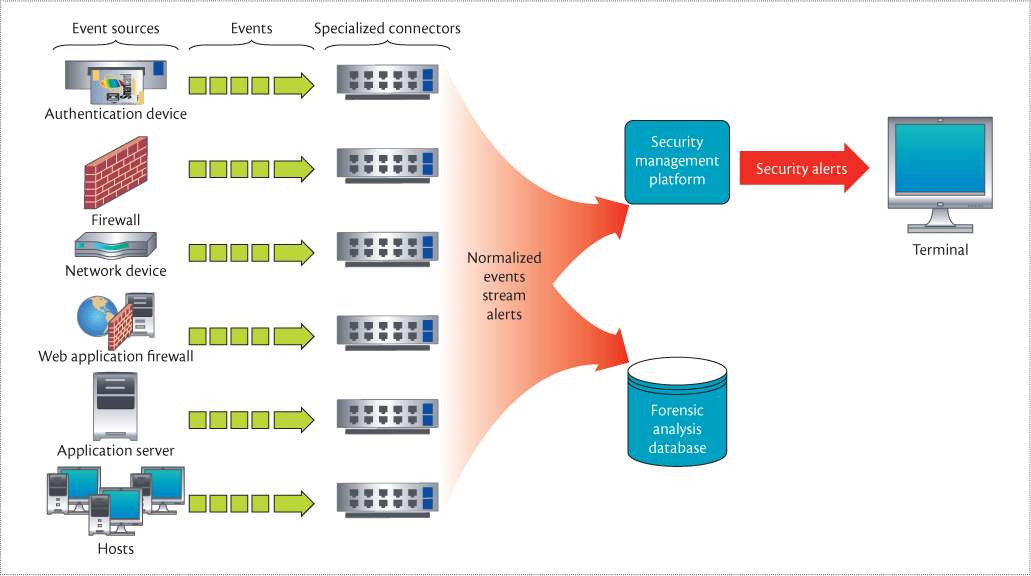
Enhancing Security with a Security Event Management System
In today’s digital landscape, organisations face a myriad of security threats that can compromise sensitive data and disrupt operations. To effectively mitigate these risks, many businesses are turning to Security Event Management Systems (SEMS) as a proactive solution.
A Security Event Management System is a comprehensive platform that enables real-time monitoring, correlation, and analysis of security events across an organisation’s network. By aggregating data from various sources such as firewalls, intrusion detection systems, and antivirus software, SEMS provides a holistic view of the security posture.
One of the key benefits of a SEMS is its ability to detect and respond to security incidents promptly. By setting up alerts and automated responses based on predefined rules, organisations can swiftly address potential threats before they escalate.
Furthermore, SEMS facilitates compliance with industry regulations by generating detailed reports and audit trails of security events. This not only helps in demonstrating adherence to standards but also in identifying areas for improvement in the security infrastructure.
Another advantage of implementing a Security Event Management System is the centralisation of security operations. Instead of managing disparate security tools independently, organisations can streamline their efforts through a unified platform that offers visibility into all security events.
Overall, a Security Event Management System plays a crucial role in enhancing an organisation’s cybersecurity posture by providing real-time monitoring, rapid incident response capabilities, compliance support, and operational efficiency. In an era where cyber threats continue to evolve, investing in a SEMS is essential for safeguarding critical assets and maintaining business continuity.
Essential Insights into Security Event Management Systems: Key Functions, Benefits, and Considerations
- What is a Security Event Management System and how does it work?
- How does a Security Event Management System differ from a SIEM?
- What are the key benefits of implementing a Security Event Management System?
- How can a Security Event Management System improve incident response times?
- What types of data sources can be integrated with a Security Event Management System?
- Is a Security Event Management System suitable for small businesses, or is it only for large organisations?
- How does a Security Event Management System help with compliance and regulatory requirements?
- Can a Security Event Management System detect insider threats as well as external attacks?
- What should an organisation consider when selecting a Security Event Management System?
What is a Security Event Management System and how does it work?
A Security Event Management System (SEMS) is a sophisticated platform designed to monitor, analyse, and respond to security events within an organisation’s network. It works by collecting data from various security tools and devices, such as firewalls, intrusion detection systems, and antivirus software, and correlating this information to identify potential threats. By establishing predefined rules and alerts, SEMS can detect suspicious activities in real-time and trigger automated responses to mitigate risks promptly. Additionally, SEMS provides comprehensive reporting capabilities that offer insights into security incidents, aiding in compliance efforts and continuous improvement of the organisation’s security posture.
How does a Security Event Management System differ from a SIEM?
A common question regarding security event management systems is how they differ from Security Information and Event Management (SIEM) solutions. While both aim to enhance cybersecurity by monitoring and analysing security events, the main distinction lies in their scope and functionality. A Security Event Management System typically focuses on real-time monitoring and immediate response to security incidents, while a SIEM solution incorporates additional features such as log management, compliance reporting, and advanced analytics. In essence, a SIEM is a more comprehensive tool that integrates security information with event management capabilities, providing organisations with a holistic approach to threat detection and mitigation.
What are the key benefits of implementing a Security Event Management System?
Implementing a Security Event Management System (SEMS) offers a range of key benefits for organisations seeking to enhance their cybersecurity defences. One significant advantage is the real-time monitoring capabilities provided by SEMS, allowing businesses to detect and respond to security incidents promptly. Additionally, SEMS facilitates centralised management of security events from various sources, streamlining operations and improving overall efficiency. By generating detailed reports and audit trails, SEMS also aids in compliance efforts, helping organisations demonstrate adherence to industry regulations. Overall, the implementation of a Security Event Management System empowers organisations with proactive threat detection, rapid incident response, compliance support, and operational effectiveness in safeguarding their digital assets.
How can a Security Event Management System improve incident response times?
A Security Event Management System can significantly enhance incident response times by enabling real-time monitoring and automated alerting mechanisms. By aggregating security event data from various sources and correlating them to identify potential threats, a SEMS provides security teams with immediate visibility into suspicious activities. Predefined rules and triggers can be set up to generate alerts for specific events, allowing teams to swiftly investigate and respond to incidents before they escalate. This proactive approach not only reduces the time taken to detect security breaches but also facilitates a rapid and coordinated response, ultimately strengthening an organisation’s overall security posture.
What types of data sources can be integrated with a Security Event Management System?
A Security Event Management System (SEMS) can integrate a wide range of data sources to provide comprehensive security monitoring and analysis. Commonly integrated data sources include network devices such as firewalls, routers, and switches, as well as security appliances like intrusion detection systems (IDS) and intrusion prevention systems (IPS). Additionally, SEMS can incorporate data from servers, endpoints, applications, and cloud services to offer a holistic view of an organisation’s security landscape. By aggregating and correlating data from diverse sources, a SEMS enables proactive threat detection and rapid incident response to safeguard against cyber threats effectively.
Is a Security Event Management System suitable for small businesses, or is it only for large organisations?
When considering whether a Security Event Management System (SEMS) is suitable for small businesses, it’s important to understand that the benefits of such a system extend beyond the size of the organisation. While SEMS are often associated with large enterprises due to their complex security needs, they can also be highly beneficial for small businesses. A SEMS provides real-time monitoring, incident response capabilities, compliance support, and operational efficiency, all of which are crucial for safeguarding sensitive data and maintaining business continuity regardless of the company size. By centralising security operations and providing a holistic view of security events, a SEMS can help small businesses proactively detect and address threats, ultimately enhancing their cybersecurity posture in an increasingly digital world.
How does a Security Event Management System help with compliance and regulatory requirements?
A Security Event Management System (SEMS) plays a vital role in assisting organisations with compliance and regulatory requirements by providing a comprehensive platform for monitoring and managing security events. By aggregating data from various security tools and systems, SEMS can generate detailed reports and audit trails that demonstrate adherence to industry regulations. This capability not only simplifies the process of meeting compliance standards but also helps in identifying any gaps or vulnerabilities in the security infrastructure that need to be addressed. Additionally, SEMS can automate compliance-related tasks, such as generating compliance reports and alerts, thereby streamlining the compliance process and ensuring that the organisation remains in line with regulatory requirements at all times.
Can a Security Event Management System detect insider threats as well as external attacks?
A Security Event Management System is designed to detect a wide range of security threats, including both insider threats and external attacks. By monitoring and analysing security events across the network, a SEMS can identify suspicious activities that may indicate malicious intent from insiders or external attackers. Through advanced correlation techniques and predefined rules, a SEMS can differentiate between normal user behaviour and potentially harmful actions, enabling organisations to proactively address insider threats and external attacks before they cause significant damage. With its comprehensive monitoring capabilities, a Security Event Management System is a valuable tool in safeguarding against all types of security risks, whether they originate from within the organisation or externally.
What should an organisation consider when selecting a Security Event Management System?
When selecting a Security Event Management System, organisations should consider several key factors to ensure they choose the most suitable solution for their needs. Firstly, it is essential to assess the scalability of the system to accommodate the organisation’s current and future security requirements. Additionally, compatibility with existing security infrastructure and seamless integration capabilities are crucial for a smooth implementation process. Furthermore, evaluating the system’s reporting and analytics features, as well as its ability to provide real-time alerts and incident response capabilities, is vital for effective threat detection and mitigation. Lastly, considering factors such as cost-effectiveness, ease of use, and vendor reputation can help organisations make an informed decision when selecting a Security Event Management System that best aligns with their cybersecurity goals.